

Maintaining personal hygiene tools requires the same practical understanding as caring for specialized gear around the house. When dealing with ear canal maintenance, traditional methods like cotton swabs frequently fail because they push cerumen—commonly known as earwax—deeper into the canal, creating severe impaction against the eardrum. The Wush Ear Cleaner by Black Wolf has gained widespread popularity as an automated, water-based solution designed to flush out wax safely using micro-jet water streams. Understanding how this electronic irrigator performs, its safety profile, and its internal mechanics helps determine whether it deserves a spot in your personal care kit.
Quick answer: Yes, the Wush Ear Cleaner safely removes loose to moderate earwax buildup by using gentle, temp-controlled water streams that break up debris without physical contact. However, it is not designed to clear fully impacted earwax plugs or treat active ear infections, and it should never be used by individuals with ear tubes or perforated eardrums.
How the Wush Ear Cleaner Works: Mechanics and Specifications
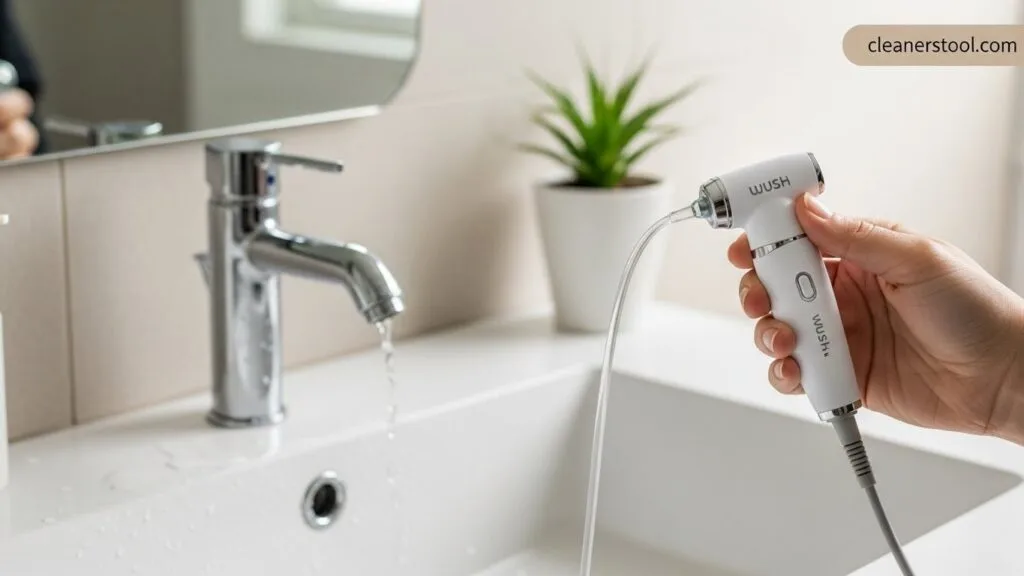
The Wush Ear Cleaner relies on controlled fluid dynamics rather than mechanical friction to clear the ear canal. Unlike manual bulb syringes that produce erratic water pressure, this device utilizes an electric pump powered by an internal 1400mAh lithium-ion rechargeable battery. The pump delivers a regulated, triple-jet water stream through a soft silicone tip. This three-stream design directs fluid along the walls of the ear canal rather than firing directly at the delicate tympanic membrane (eardrum), reducing the risk of barotrauma or perforation.
The device features three distinct pressure modes designed to accommodate sensitive ears as well as stubborn buildup. Low pressure offers a gentle massage-like flow, Medium increases fluid volume for standard wax clearing, and High provides maximum force to dislodge sticky debris. The integrated reservoir holds approximately 200 mL (6.7 fl oz) of water, which provides sufficient volume for a full irrigation cycle without requiring mid-clean refills. It also carries an IPX7 waterproof rating, allowing safe operation near bathroom sinks or inside the shower.
To evaluate how the Wush stacks up against traditional and medical-grade ear cleaning tools, consider the following technical breakdown:
| Cleaning Method | Mechanism | Safety Level | Efficiency | Estimated Cost (2026) |
|---|---|---|---|---|
| Wush Ear Cleaner | Automated 3-jet warm water irrigation | High (when used correctly) | Moderate to High | $40 - $60 |
| Cotton Swabs (Q-tips) | Manual scraping / push friction | Low (high impaction risk) | Low | $3 - $5 |
| Manual Bulb Syringe | Single-jet manual water displacement | Moderate | Moderate | $6 - $12 |
| In-Clinic ENT Flush | High-volume professional irrigation/suction | Very High (physician monitored) | Very High | $100 - $250+ |
Step-by-Step Guide: How to Use the Wush Ear Cleaner Correctly
Proper operational technique makes all the difference between a successful ear cleaning routine and unnecessary discomfort. Water temperature is the single most critical variable when using any ear irrigation system. You must always use clean, lukewarm water warmed strictly between 98°F and 100°F (36.5°C to 37.8°C). Introducing cold or hot water into the ear canal triggers the caloric reflex—a sudden thermal reaction that causes severe dizziness, rapid eye movements (nystagmus), and nausea.
If you have dense, dry, or sticky earwax, pre-softening the wax yields significantly better results. Apply 3 to 5 drops of an over-the-counter cerumenolytic agent, such as a 6.5% carbamide peroxide solution or plain mineral oil, into the ear canal 15 to 30 minutes prior to flushing. This softens hardened wax matrixes, allowing the low-pressure water streams to break them apart rapidly without requiring prolonged flushing cycles.
- Prepare the Reservoir: Fill the 200 mL water chamber with body-temperature water. Verify the warmth against the inside of your wrist before attaching it to the body unit.
- Attach the Nozzle: Twist a clean, flexible silicone nozzle securely onto the wand. Ensure the rubber sealing O-ring is properly seated to prevent internal pressure leaks.
- Position Over a Sink or Basin: Tilt your head slightly toward the side being cleaned. Position the included catch basin directly under your earlobe to catch the drainage water and flushed wax fragments.
- Start at Lowest Pressure: Place the silicone tip gently at the opening of the ear canal—do not shove or wedge the tip tightly inside. Turn the unit on to Setting 1 (Low) to test your comfort level.
- Irrigate in Controlled Bursts: Direct the spray continuously for 10 to 15 seconds while subtly changing the angle of the wand to allow water and wax to flow outward freely. Increase to Setting 2 or 3 only if necessary.
- Dry the Ear Canal: Once complete, tilt your head toward your shoulder to drain remaining water. Gently pat the outer ear dry with a clean microfiber cloth. Never insert paper towels or cotton swabs into the canal to dry it.
Cleaner's tip: Never store your ear irrigator with water left inside the internal pump or reservoir. Residual standing water rapidly develops a bacterial biofilm and mold culture inside the tiny pump tubes. Flush the pump with a mixture of equal parts distilled water and 70% isopropyl alcohol once a month, then run the motor dry for 5 seconds to air-out the lines before storing it in your cabinet.
Medical Safety, Common Issues, and Real-World Performance
From an otolaryngology (ENT) perspective, water flushing is a widely accepted technique for removing earwax, provided the tympanic membrane is intact. Earwax serves an essential physiological purpose: it traps dust, prevents bacterial growth through an acidic pH balance, and lubricates the ear canal skin. Complete removal of all wax is neither necessary nor medically advisable. The Wush Ear Cleaner is safe for routine maintenance, but it must be avoided by anyone with artificial ear tubes (tympanostomy tubes), a history of perforated eardrums, recent ear surgery, or active swimmer's ear (otitis externa).
A frequent problem reported by users on retail sites like Amazon and forums like Reddit is the unit failing to pump water despite turning on. In roughly 80% of cases, this isn't a mechanical motor failure—it is caused by an airlock inside the internal siphon tube or mineral scaling from hard tap water. If your Wush motor hums but no water exits the nozzle, fill the tank with warm water, turn the unit upside down, and cycle the power button 3 to 4 times to force air pockets out of the internal impeller housing.
Community feedback highlights distinct usage patterns. Users with naturally soft, oily cerumen report high satisfaction, noting that 20 to 30 seconds of flushing clear their ears completely. Conversely, users dealing with impacted, bone-dry wax often leave negative feedback when water alone fails to dislodge the plug on the first attempt. Combining the device with pre-treatment drops solves this issue for the vast majority of consumers.
Clear Recommendations: Should You Buy the Wush Ear Cleaner?
The Wush Ear Cleaner is an excellent investment for individuals who naturally produce excess earwax and want a repeatable, safe, and hygienic home maintenance routine. It effectively replaces dangerous cotton swabs and cumbersome manual bulb syringes. If you want a controlled, mess-free tool to clear moderate wax buildup every few weeks, the Wush delivers solid performance and great value for money in the $40–$60 price range. However, if you suspect your ear canal is completely blocked, experience pain, discharge, or hearing loss, bypass at-home devices entirely and visit a healthcare professional for manual micro-suction or professional irrigation.
Frequently Asked Questions
Is the Wush Ear Cleaner safe to use on children?
While the device uses gentle water streams, it is recommended primarily for adults and older teenagers who can follow instructions and sit still. Children have smaller, more delicate ear canals, and an sudden movement while the tip is inserted could cause discomfort or injury. Always consult a pediatrician before using electric irrigators on young children.
How often should I clean my ears with the Wush device?
You should only use the device when you feel noticeable wax buildup or fullness in the ear. For most individuals, using it once every 2 to 4 weeks is more than sufficient. Over-cleansing strips the ear canal of its natural protective oils, which can lead to dry, itchy skin and an increased risk of infection.
Why does my ear feel full or muffled after using the Wush?
A muffled sensation right after irrigation usually means tap water is trapped behind a small wax remnant or lingering near the eardrum. Tilt your head to the side, pull your earlobe gently downward and backward to straighten the canal, and allow gravity to drain the trapped liquid. If muffled hearing persists for more than 24 hours, contact a medical professional.
Can I use hydrogen peroxide in the Wush water tank?
Do not fill the Wush reservoir with pure hydrogen peroxide or harsh chemical mixtures, as high concentrations can irritate the delicate lining of the ear canal and damage the internal seals of the device. If desired, you may add a few drops of 3% hydrogen peroxide to a full tank of warm water, but plain, warm tap or distilled water works best for general flushing.


